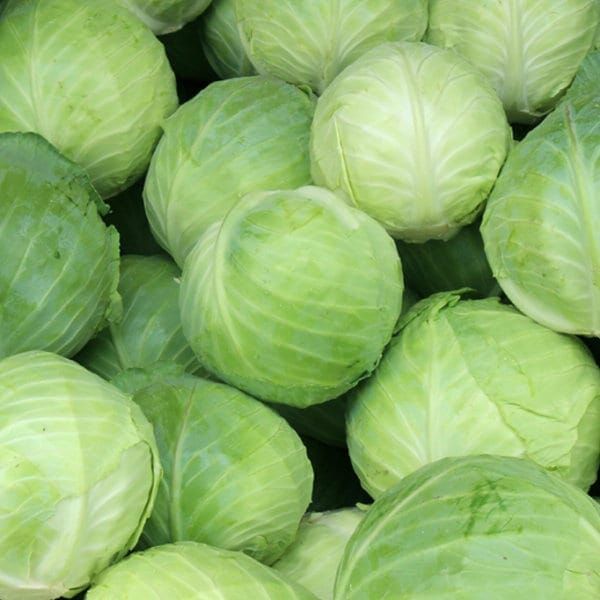
Cabbage Early Round Dutch 1/4oz
Share
$3.25
In stock
Have questions?
Product details
Key Growing Information
- Sunlight: Full sun is ideal, but it can tolerate light shade in very hot areas.
- Soil: Prefers fertile, well-drained soil with a pH of 6.0-7.5. Amend the soil with organic matter and use a high-nitrogen fertilizer regularly, as cabbage are "heavy feeders".
- Watering: Maintain consistent, even soil moisture. Uneven watering, especially as heads reach maturity, can cause them to split.
- Spacing: Plant or thin seedlings 12–24 inches apart, in rows 24–36 inches wide.
Planting Instructions
You can start seeds indoors for transplanting or sow them directly in the garden.
- Indoor Sowing (Recommended for Spring Crop):
- Start seeds indoors 6–8 weeks before your last expected spring frost date.
- Sow seeds about ¼–½ inch deep in seed-starting mix.
- Keep the soil temperature around 75°F until germination (which usually takes 7-10 days), then reduce the air temperature to around 60°F after sprouting.
- Harden off seedlings (gradually acclimate them to outdoor conditions) for 7–10 days before transplanting them into the garden, about 2-4 weeks before the last frost date.
- Direct Sowing (For Fall Crop or Warmer Climates):
- Sow seeds directly outdoors in early spring or late summer (mid-summer for a fall crop).
- Sow 3-4 seeds every 12 inches and thin to one healthy plant in each spot once seedlings are established.
Care and Maintenance
- Pest Control: Watch for common pests like cabbage worms, loopers, and flea beetles. Use floating row covers early in the season or organic controls (like BT spray) to protect plants.
- Weeding: Keep the area around your cabbage weed-free.
- Companion Planting: Plant near aromatic herbs like thyme, peppermint, sage, or rosemary to naturally repel pests. Avoid planting with tomatoes, strawberries, or pole beans.
Harvesting
Harvest when the heads are fully formed, feel solid, and are firm when squeezed. Smaller heads are generally more tender. Use a sharp knife to cut the head off at its base, leaving the outer leaves and stem in the ground, which may produce small secondary "mini-heads".
Cabbage Early Round Dutch 1/4oz
Share
Powered by Lightspeed
Display prices in:USD